Magic Factory of Style and Design
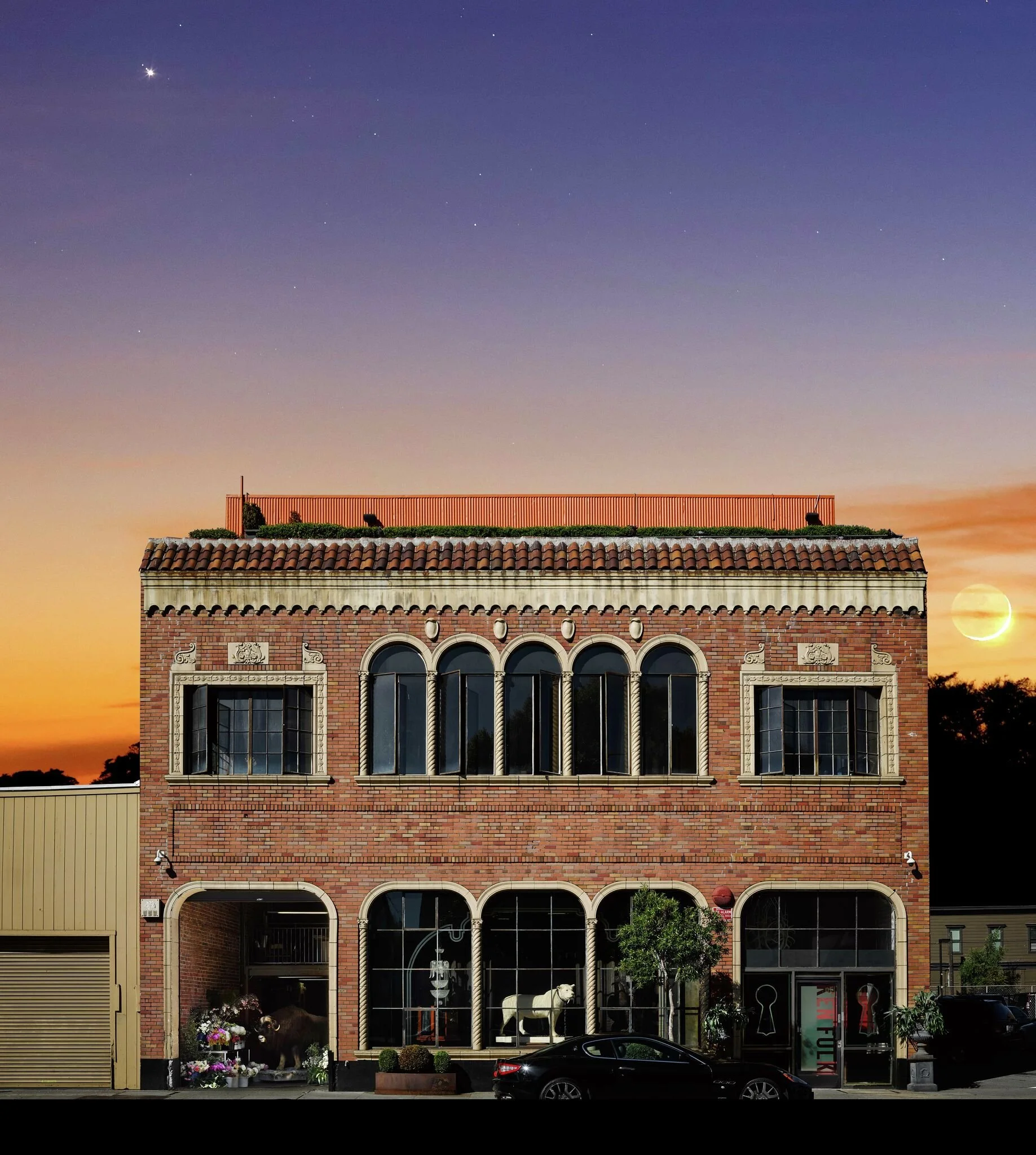
Just a few blocks from RENOU, tucked into the heartbeat of SoMa’s creative corridor, stands a brick and timber landmark that has become one of the neighborhood’s most storied spaces. Known simply as The Magic Factory, this 14,000-square-foot building blurs the line between studio, gallery, event space, and architectural icon — and it tells a story that spans generations of San Francisco life and culture.
From Warehouse to Wonderland
The Magic Factory began its life in the early 20th century as a furniture factory, built with the sturdy bones of brick walls, timber framing, and open industrial volumes — hallmarks of SoMa’s early industrial character.
Later, in a chapter that cemented its edgy mystique, the building became home to Mr. S Leather, a leather goods workshop and showroom tied to San Francisco’s vibrant leather culture.
Both of these earlier uses left traces — sandblasted brick, expansive open floors, and a wink toward the city’s complex cultural layers — that designer Ken Fulk would later embrace and elevate.
Ken Fulk Discovers SoMa’s Secret
Ken Fulk, the San Francisco–based designer renowned for his theatrical approach to interiors and events, first encountered the building in 2007. Although he wasn’t initially in the market, the space seized his imagination. Within weeks, he had acquired it, using a small business loan to transform part of it into his live–work loft and the rest into the studio headquarters for Ken Fulk Inc.
Fulk’s vision was simple but ambitious: to let the building’s original industrial spirit live on, while introducing layers of design theatrics — elaborate finishes, curated art collections, and bespoke architectural interventions — that would turn functional space into inspiration itself.
Under Fulk’s hand, the Magic Factory became much more than a workplace. It housed:
Peep Show, a rotating gallery and shop showcasing design curios and collectible objects;
A floral design studio and creative workspace;
Fulk’s own famous loft — a multi-level residence that became both a living showroom and the backdrop for dozens of legendary parties;
Workrooms, offices, libraries, and social spaces where collaborations between artists, designers, and clients often begin.
Fulk’s design philosophy treats every space like a story — one unfolding like a film, with each room a scene and every surface an opportunity for mood and narrative.
Over the years, the Magic Factory became as famous for what happened inside as for what it looked like.
The loft — with its soaring heights, industrial bones, and dramatic theatrical accents — hosted some of San Francisco’s most extravagant and creative gatherings. Elaborate themed balls, masquerades, and over-the-top soirées brought together socialites, celebrities, artists, and creatives from across the world. Guests at these events included names like Tom Cruise, Stevie Nicks, Emma Stone, Ryan Gosling, Jean-Paul Gaultier, and Chaka Khan — and scenes ranged from velvet–draped masquerade balls to performances that merged drag, music, and high drama.
One early event — described as a masked ball inspired by Truman Capote’s Black and White Ball — set the tone for years of curated revelry, with live piano, performers, and an atmosphere that married elegance with whimsy.
These parties were more than just social gatherings; they became part of SoMa’s cultural folklore — spaces where disparate communities collided, where leather culture and high society danced alongside artists and designers, all under one industrial ceiling.
In 2025, he announced plans to bring events back into the space — hosting curated gatherings and design experiences once again — reaffirming the building’s identity as both a creative studio and social stage.
In a place where brick and beam meet bold imagination, The Magic Factory stands as a reminder that SoMa’s identity isn’t just about what gets built next — but the stories, connections, and moments that unfold within its walls.
Click here to learn more about the Magic Factory.