Saint Joseph’s Arts Society — Temple of Creativity
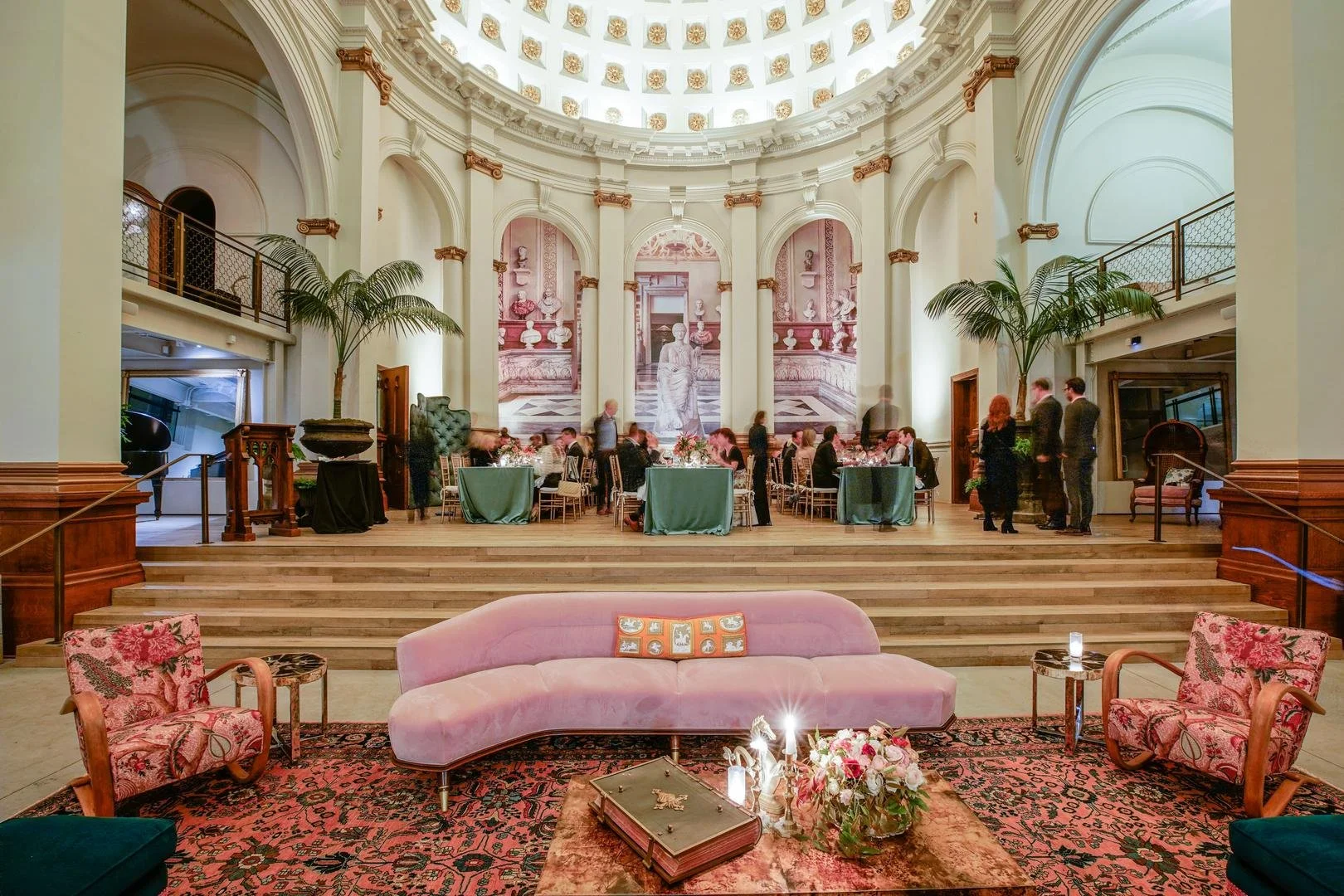
Saint Joseph’s Arts Society is one of SoMa’s most remarkable renewals. Founded by designer Ken Fulk in 2018, the Society celebrates art, design, and culture through exhibitions, immersive events, and multidisciplinary programming. Its home, a restored 1913 Romanesque Revival church, is now recognized as both a National Historic Landmark and City Landmark.
Today, Saint Joseph’s is a creative haven where history, community, and contemporary design blend together. It reflects the spirit of SoMa itself, rooted in heritage, constantly reinventing, and always shaping what comes next.
Originally built in 1913 as Saint Joseph’s Church, the structure was designed in the Romanesque Revival style, defined by rounded arches, thick masonry walls, and a dramatic barrel-vaulted nave. For decades, it served a working-class immigrant parish that anchored early SoMa. As the neighborhood industrialized and demographics shifted, the congregation declined, and the building eventually closed in the late 20th century. It later sat largely vacant, at risk of deterioration, even as its architectural integrity remained intact.
When Ken Fulk encountered the building, he saw more than a former church, he saw volume, light, and narrative. The soaring 40-foot ceilings, exposed trusses, original stained glass, and hand-carved details offered a rare spatial experience in a district better known for warehouses and loft conversions. Rather than erase its ecclesiastical past, the restoration preserved the nave, altar, and historic detailing while integrating contemporary lighting, furnishings, and infrastructure.
Fulk established Saint Joseph’s Arts Society as a nonprofit cultural institution dedicated to interdisciplinary creativity — spanning visual art, performance, music, culinary arts, and design. The goal was not to create a conventional museum, but a gathering place: part exhibition hall, part salon, part community forum. Programming ranges from curated art installations and artist residencies to lectures, performances, and immersive social events designed to spark dialogue across creative fields.
Why SoMa? The choice was intentional. SoMa’s industrial past, Filipino cultural heritage district, and evolving creative ecosystem offered a context aligned with reinvention. The building’s revival parallels the neighborhood’s own transformation — from industrial corridor to innovation district to cultural hub. In restoring a 1913 landmark rather than constructing something new, Fulk positioned the Society as both preservation and progression.
Click here to learn about future events.